
Creating a shared decision-making process that helped distributed teams prioritize work with confidence during the COVID-19 pandemic.
Role: Design Lead
Industry: Electronics
Duration: 6 months
Outcome: Increase team alignment, enabling faster delivery of value to the end customer in each agile cycle.
Context
During the COVID-19 pandemic, a distributed product team needed a better way to prioritize an increasingly complex backlog.
Business stakeholders lacked visibility into the product roadmap, while the development team needed clearer priorities and a shared understanding of where the product was heading.
The challenge wasn’t simply running a remote workshop. It was creating a decision-making process that aligned everyone around the same product vision.

My Role
As Design Lead, I facilitated a series of remote prioritization workshops involving product, business and engineering stakeholders.
My role included designing the collaboration process, facilitating discussions, structuring decision-making activities and translating a fragmented backlog into a shared roadmap.
The Challenge
The backlog had grown over time without a clear prioritization strategy.
User stories had been written by different people, business expectations had evolved and technical complexity varied significantly across features.
Before deciding what to build next, the team first needed a common understanding of priorities, dependencies and long-term goals.
Our Approach
We began by establishing a shared product vision before discussing individual user stories.
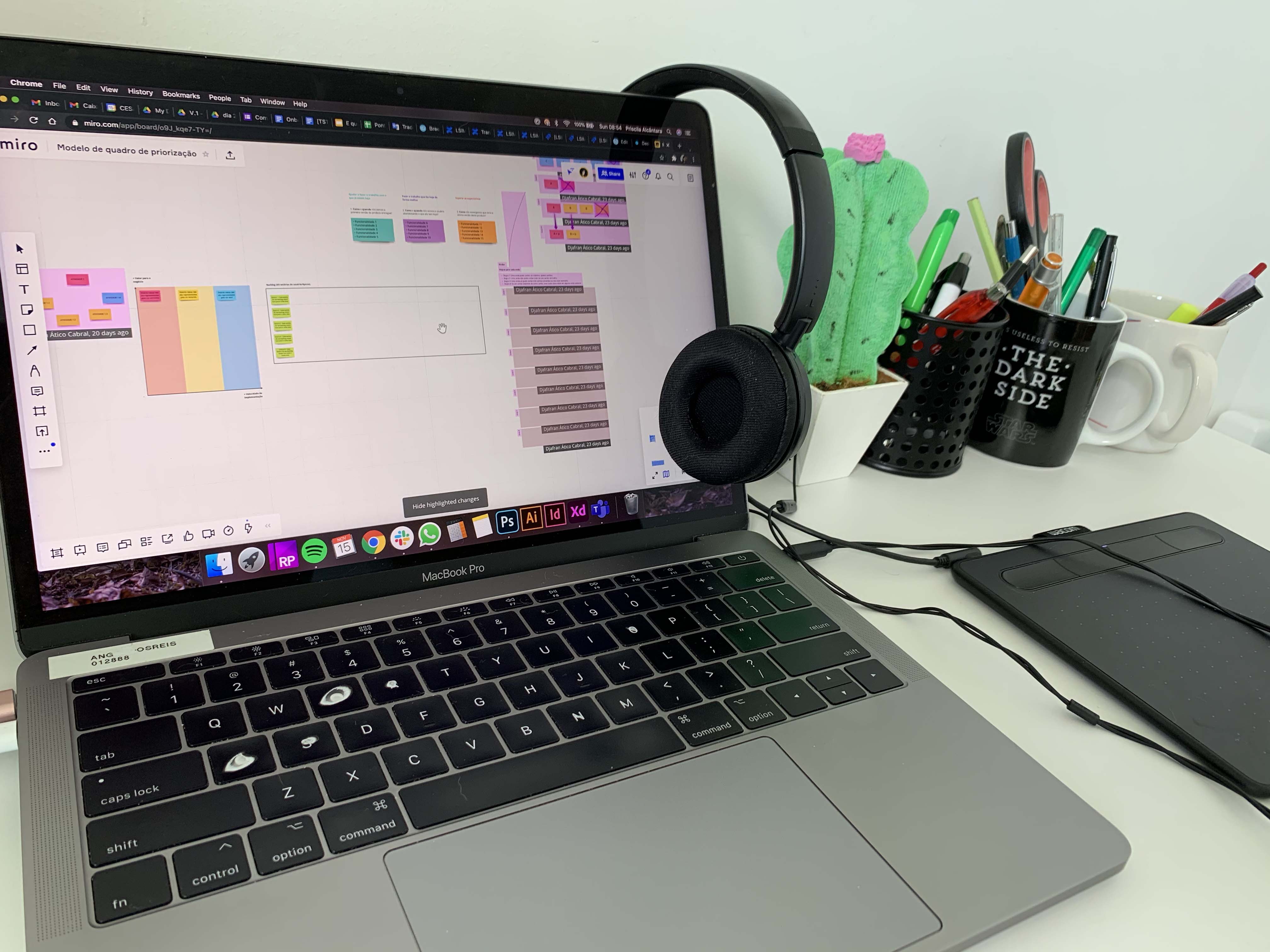
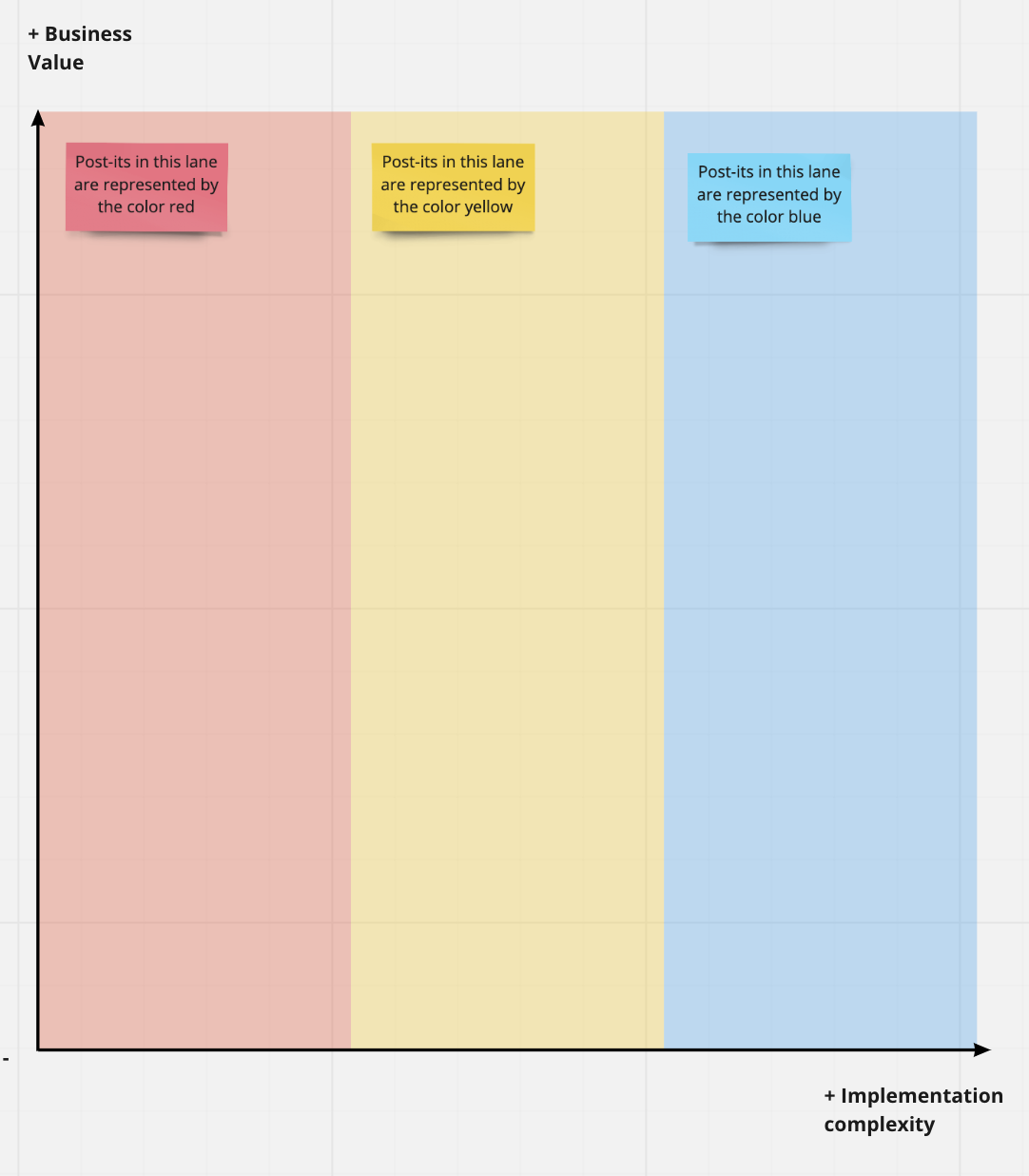
Using Miro as a collaborative workspace, we organized the backlog into a prioritization matrix balancing business value and implementation complexity.
Instead of treating prioritization as a one-time activity, we created a lightweight framework that the team could revisit every week as priorities evolved.
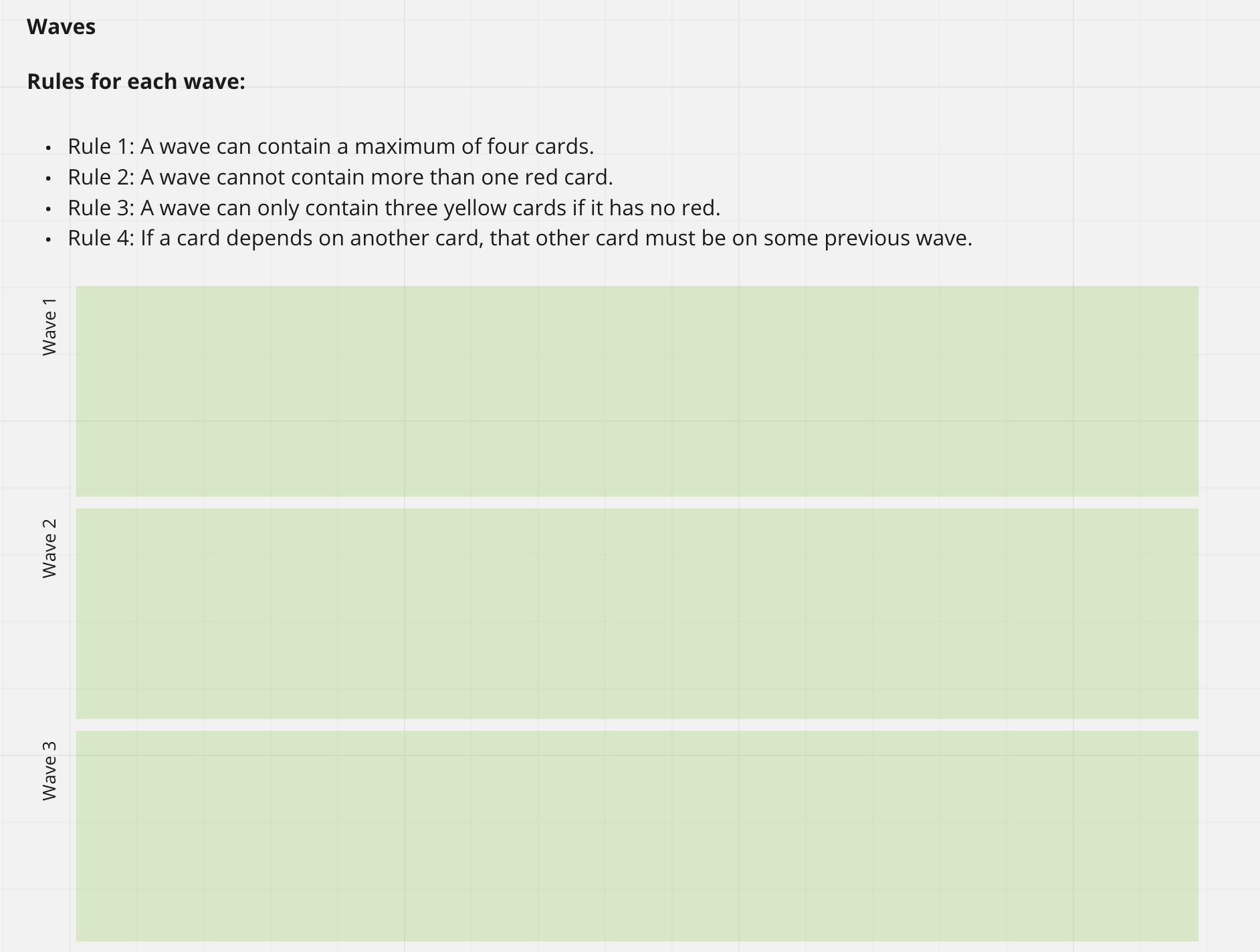
The wave planning model introduced clear constraints around capacity, dependencies and risk, making roadmap decisions more transparent and collaborative.

Outcomes
The workshops transformed a fragmented backlog into a shared planning process.
The team gained:
- greater alignment between business and engineering;
- improved visibility into upcoming releases;
- clearer prioritization criteria;
- a living roadmap that could evolve continuously as new information emerged.
Rather than producing a static plan, the process established a shared decision-making practice that supported ongoing product development.
I wrote and publish about this process in the portuguese page of uxdesign.cc.

