
Role: Senior Product Designer
Industry: Energy
Duration: 4 months
Outcome: Reduced energy losses by more than 20%.
Context
A large energy company was looking for ways to reduce operational energy losses, one of its most critical business challenges.
Initial assumptions suggested the solution would require improvements to existing operational processes. Before proposing changes, however, we needed to understand how field teams actually worked and where losses originated.
My Role
As Senior Product Designer at CESAR, I worked as part of a multidisciplinary team throughout the discovery, facilitation and validation process.
My role included field research, workshop facilitation, Design Sprint activities, interaction design, rapid prototyping and solution validation.

The Challenge
Energy loss involved multiple teams, disconnected processes and operational constraints accumulated over many years.
Rather than optimizing isolated activities, the challenge was identifying which parts of the recovery process would generate the greatest impact if redesigned.
Most importantly, we discovered that the real problem wasn’t exactly the one stakeholders initially believed they had.

Our Approach
We started with field research.
By observing employees in their daily work, interviewing specialists and mapping existing workflows, we uncovered pain points that weren’t visible from inside the organization.
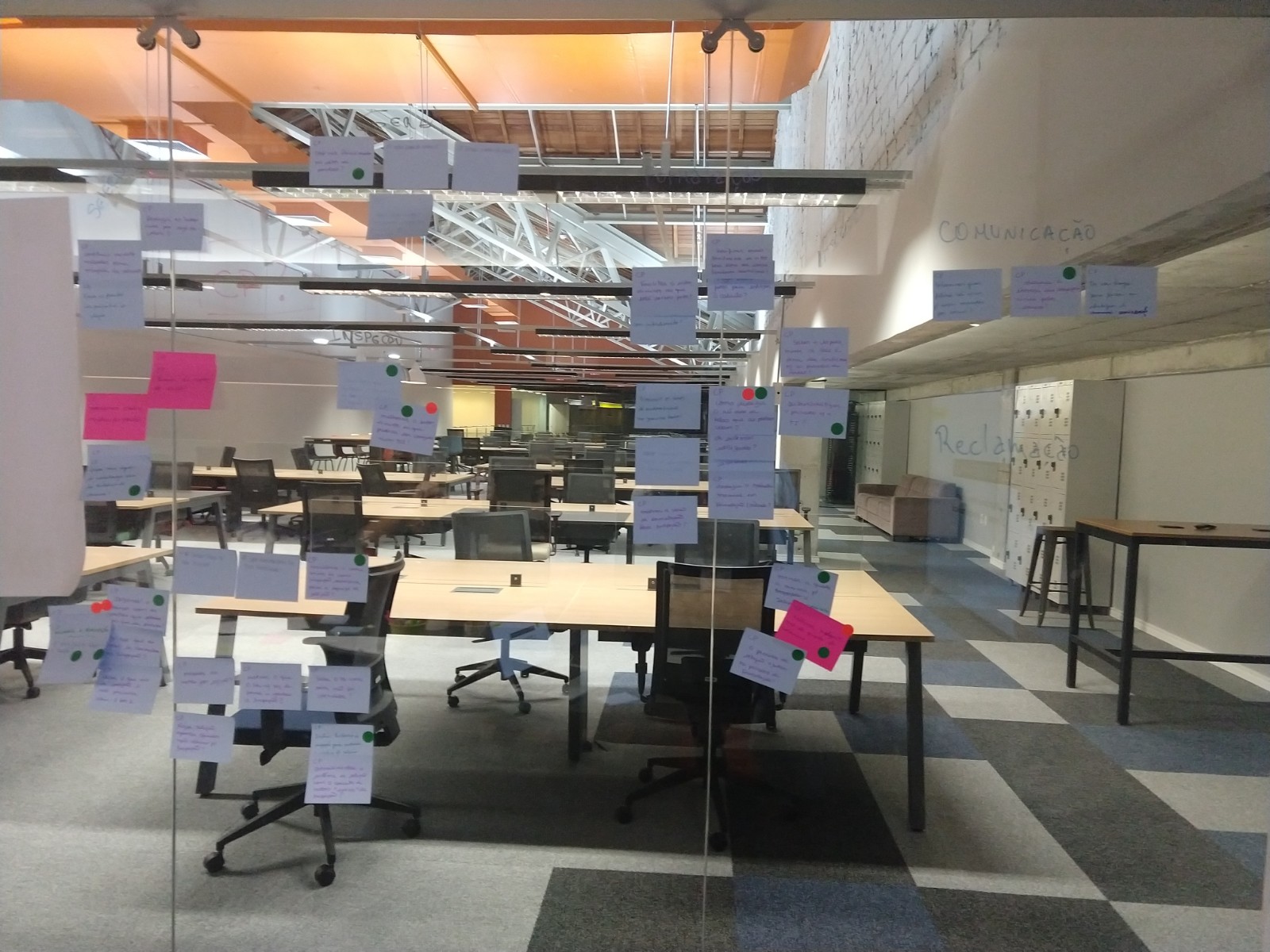
Based on these insights, we selected two high-impact opportunities and explored them through consecutive Design Sprints involving company employees as active participants.
Instead of validating ideas in isolation, the process combined mapping, ideation, rapid prototyping and user validation to quickly test alternative ways of improving the energy recovery process.
Outcomes
The redesigned processes contributed to reducing energy losses by more than 20%.
Beyond the measurable business impact, the project demonstrated the value of combining field research with collaborative experimentation before investing in larger operational changes.
Following the engagement, the client expanded its partnership with CESAR through additional innovation projects.
I described a little bit of this process, in portuguese, in a CESAR Medium publication.

